2026-09-22
Styes in Children: Why You Shouldn't Pop Them — When to Wait vs. When to See a Doctor
Most pediatric styes and chalazia resolve safely on their own. Learn why squeezing them risks infection, how to manage them at home, and when eyelid nodules threaten vision.
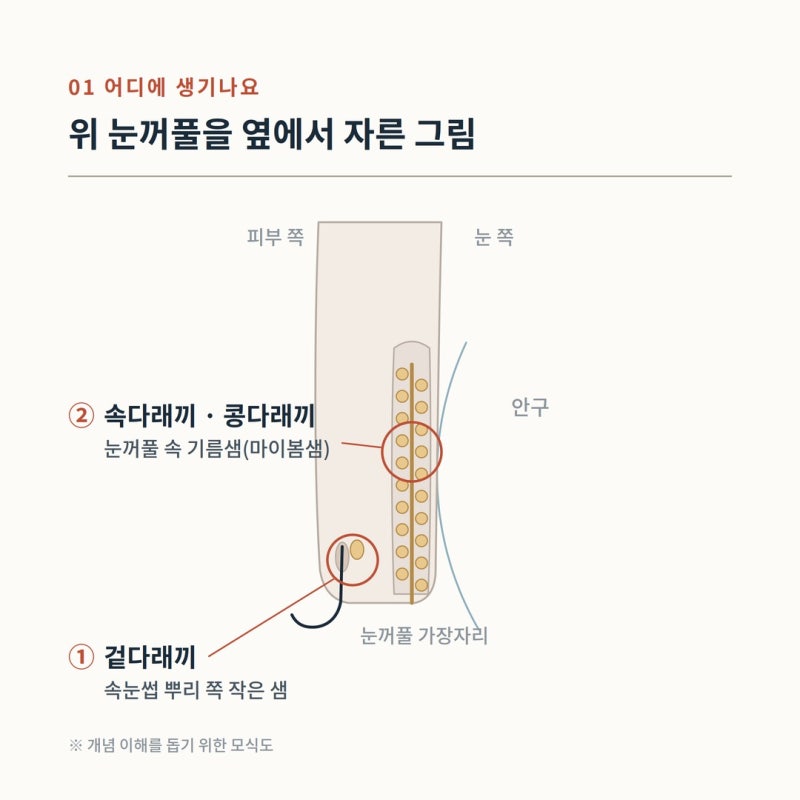

Let’s start with the bottom line.
Most styes and chalazia in children resolve on their own.
A red, swollen, and painful stye (hordeolum) usually improves within 1 to 2 weeks with just warm compresses and good eyelid hygiene
(Gurnani B et al., StatPearls: Hordeolum, 2024).
Even for painless, nodular chalazia, a Korean study analyzing 101 cases in children aged 15 and younger showed that 85.7% resolved with conservative management without surgery
(Yang SA et al., J Craniofac Surg, 2024).
However, never pop, squeeze, or lance them with a needle.
The pressure can spread the bacterial infection to surrounding tissues, and in rare cases, this can lead to preseptal cellulitis, where the entire eyelid swells.
Furthermore, some chalazia should not be left to wait.
A study comparing 398 children aged 0.5 to 6 years found that 42.97% of eyes with a chalazion had astigmatism, compared to only 27.21% of eyes without one.
The risk was particularly elevated when the nodule was in the center of the upper eyelid, 3 mm or larger, or when multiple lesions (2 or more) were present
(Ouyang L et al., BMC Ophthalmol, 2022;22:310).
If your child is in the critical period of visual development, it is highly recommended to have their visual acuity and refraction evaluated in these circumstances.
Table of Contents
Why Do Styes and Chalazia Occur? — External Hordeolum, Internal Hordeolum, and Chalazion
Do They Resolve on Their Own? How Long Does It Take?
Why Shouldn't You Squeeze Them?
What Can You Do at Home? — How to Apply Warm Compresses
Can You Just Wait Out a Child's Chalazion Without Surgery?
Chalazia That Shouldn't Be Left to Wait — Astigmatism and Vision
What Treatments Are Provided at a Clinic? Limitations and Side Effects?
Children with Recurrent Styes — Checking for Blepharitis
Red Flag Symptoms Requiring Immediate Medical Attention
When to Seek an Ophthalmic Consultation
Top 5 Frequently Asked Questions
1. Why Do Styes and Chalazia Occur? — External Hordeolum, Internal Hordeolum, and Chalazion
The eyelids contain numerous tiny glands that supply the lipid (oil) layer of the tear film.
These include the small glands at the base of the eyelashes, as well as the meibomian glands aligned vertically within the tarsal plate of the eyelid.
When these glands become infected by bacteria or blocked, a stye or chalazion develops.
Classification | Location | Characteristics |
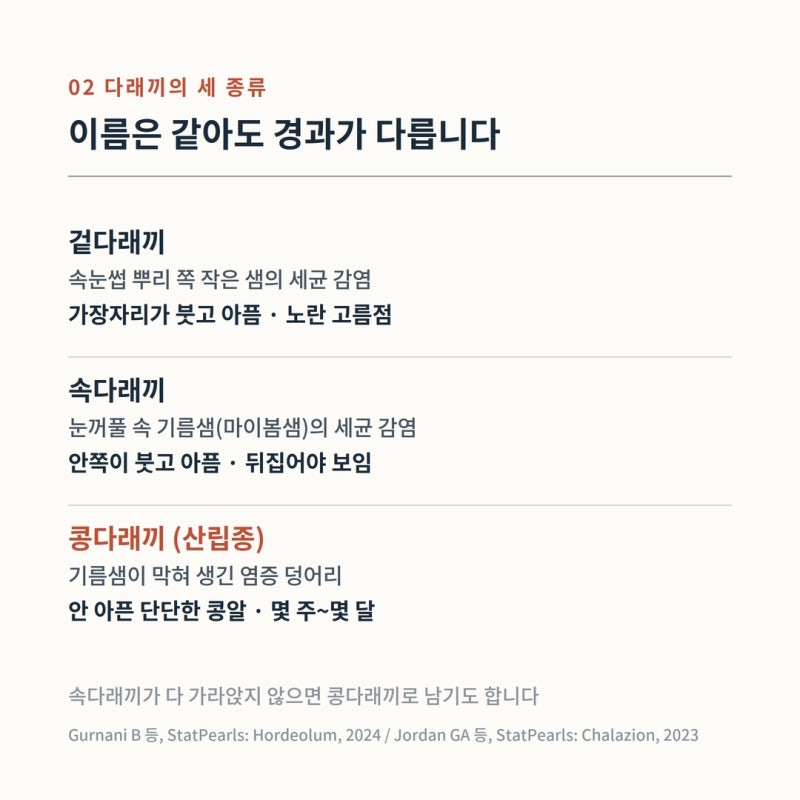
External Hordeolum (External Stye) | Bacterial infection of small glands at the eyelash base | Tender, swollen eyelid margin, often with a visible yellowish pustule |
Internal Hordeolum (Internal Stye) | Bacterial infection of the meibomian gland | Painful swelling within the tarsal plate, visible upon eyelid eversion |
Chalazion | Granulomatous inflammatory lump from an obstructed meibomian gland (non-bacterial) | Painless, firm nodule; persists for weeks to months |
Gurnani B et al., StatPearls: Hordeolum, 2024 / Jordan GA, Beier K, StatPearls: Chalazion, 2023
If an internal hordeolum does not completely resolve, it can transition into a chronic chalazion (Gurnani 2024).
This is why parents often observe that "the painful swelling improved, but a firm bump was left behind."
2. Do They Resolve on Their Own? How Long Does It Take?
Most resolve spontaneously.
However, the recovery timeline varies depending on the type.
External/Internal Hordeolum — These typically resolve within 1 to 2 weeks with warm compresses and proper lid hygiene (Gurnani 2024). Internal hordeola frequently rupture and drain spontaneously, leading to rapid resolution (Lindsley K et al., Cochrane Database Syst Rev, 2017).
Chalazion — While chalazia in adults usually resolve in about a month with conservative management (Jordan 2023), pediatric chalazia may take 10 to 12 months to gradually disappear (AAO Disease Review, Pediatric Eyelid Margin Disease — citing the Wills Eye Manual).
To be scientifically transparent:
There has not yet been a single randomized clinical trial comparing non-surgical interventions (such as warm compresses or antibiotics) for acute internal hordeola.
A Cochrane Systematic Review evaluated literature up to December 2016 and found no eligible trials, concluding that there is "no evidence either for or against the efficacy of non-surgical interventions"
(Lindsley K, Nichols JJ, Dickersin K. Cochrane Database Syst Rev, 2017).
Warm compresses are recommended because they are virtually harmless and have stood the test of time as standard practice, rather than having robust, high-level trial evidence behind them.
3. Why Shouldn't You Squeeze Them?

When a pustule forms, like a pimple, it is tempting to squeeze it.
However, as a strict rule, styes should never be squeezed or manipulated. Squeezing can force bacteria into adjacent structures (Gurnani 2024).
Potential complications associated with styes include (Gurnani 2024):
Preseptal Cellulitis (Eyelid Cellulitis) — Infection spreads into the surrounding dermis and subcutaneous tissues, causing diffuse, painful swelling and erythema across the entire eyelid.
Orbital Cellulitis — A rare but sight- and life-threatening condition where the infection spreads deep beyond the orbital septum. This is a medical emergency.
Chronic Chalazion — An incompletely resolved hordeolum may leave behind a hard, non-tender nodule.
Attempting to lance the lesion at home with a sewing needle is even more hazardous.
Home instruments cannot be sufficiently sterilized, and sudden head movements by a child can lead to severe corneal lacerations or eyelid trauma.
Even if pus is visible, do not touch it. If it fails to drain on its own and enlarges, visit an eye clinic for sterile management.
4. What Can You Do at Home? — How to Apply Warm Compresses

Parameter | Guideline |
Temperature | Comfortably warm when tested against the inner wrist (children's skin is prone to low-temperature burns) |
Duration | 10 to 15 minutes per session |
Frequency | 3 to 4 times a day |
After the Compress | Gently massage the eyelid toward the lash line with clean hands |
Precautions | Use a dedicated clean washcloth for the child; never exert squeezing pressure |
Compress duration/frequency: Gurnani 2024 (10–15 min, 3–4 times/day) / Gentle massage after warm compress: AAO Disease Review
In practice, getting a young child to lie still for 10 consecutive minutes can be challenging.
In such cases, performing shorter sessions more frequently throughout the day is much more practical.
If you heat a damp washcloth in the microwave, hot spots can easily form; always test the temperature on your inner wrist before placing it near your child's eye.
What Not to Do
Never pop, pinch, or pierce the bump with a needle.
Do not apply leftover household steroid ointments or someone else's prescribed eye drops.
If your child wears Ortho-K lenses (Dream Lens) or contact lenses, do not continue wear during active eyelid inflammation without consulting your ophthalmologist.
5. Can You Just Wait Out a Child's Chalazion Without Surgery?
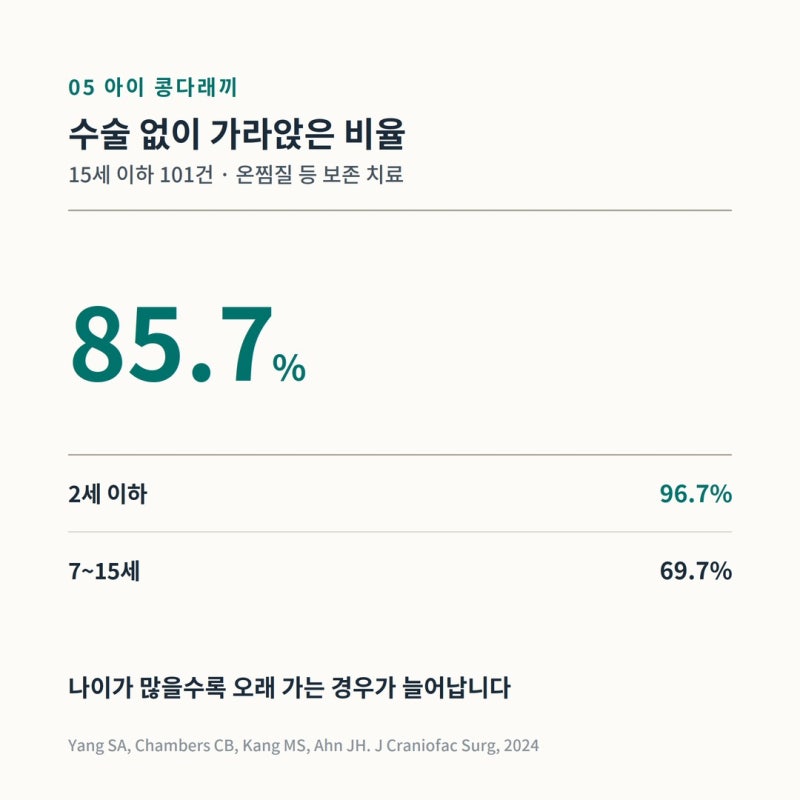
In the vast majority of cases, yes, you can wait.
The following table shows data from a Korean clinical study evaluating conservative management (warm compresses, etc.) in 101 chalazion cases in pediatric patients aged 15 and under.
Age Group | Resolution Rate with Conservative Care |
Overall | 85.7% |
Aged 2 and under | 96.7% |
Aged 7 to 15 | 69.7% |
Yang SA, Chambers CB, Kang MS, Ahn JH. Conservative Treatment of Chalazion in Pediatric Patients. J Craniofac Surg, 2024
Younger children exhibited significantly higher spontaneous resolution rates, whereas older children tended to experience longer-lasting lesions.
The authors recommend conservative treatment as the first-line approach for small, uncomplicated chalazia, emphasizing that decisions should account for lesion size, patient age, and duration of symptoms.
This mirrors the practice patterns of Korean oculoplastic specialists.
In a survey of 80 members of the Korean Society of Ophthalmic Plastic and Reconstructive Surgery (KSOPRS), among the 38 specialists who tailor treatment differently for pediatric versus adult patients, 31 responded that they extend conservative management and defer surgical incision in children
(Shin et al., Korean J Ophthalmol, 2025;39:222-240).
6. Chalazia That Shouldn't Be Left to Wait — Astigmatism and Vision
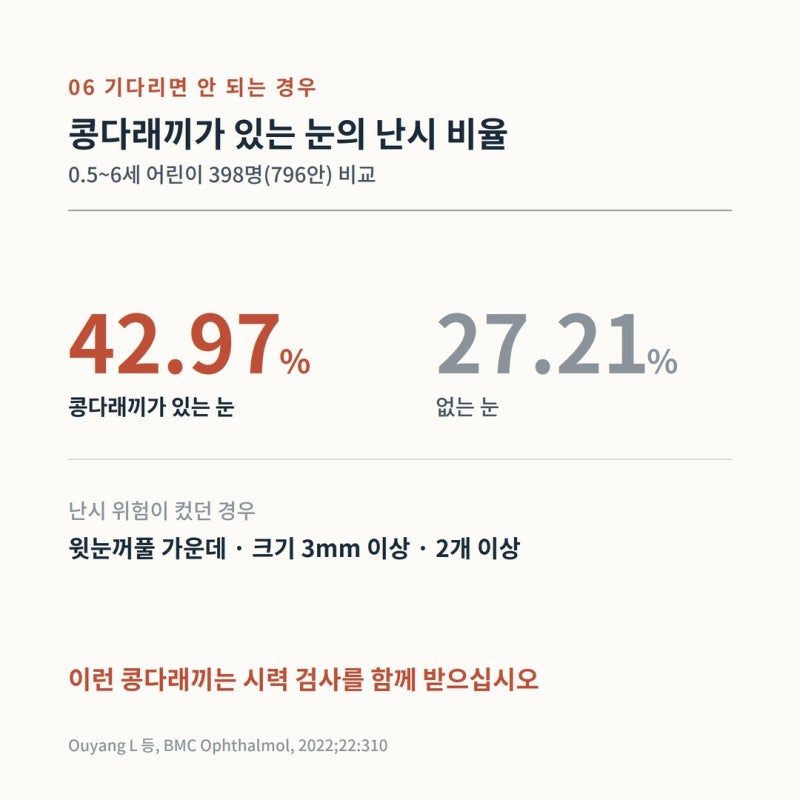
There is a vital caveat to "waiting it out." Chalazia situated on the upper eyelid can exert direct mechanical pressure on the cornea, inducing corneal distortion and astigmatism.
A cross-sectional study in China evaluating 398 children (796 eyes) aged 0.5 to 6 years revealed:
Prevalence of astigmatism in eyes with chalazion: 42.97% (211/491 eyes)
Prevalence of astigmatism in eyes without chalazion: 27.21% (83/305 eyes)
High-risk profiles: Center of the upper eyelid (50%), diameter ≥3 mm (54–55%), multiple lesions (56%)
Ouyang L, Chen X, Pi L, Ke N. BMC Ophthalmol, 2022;22:310
Visual development progresses rapidly up until roughly 6 years of age.
During this critical period, if persistent, uncorrected astigmatism occurs in only one eye, it can impair visual pathway development and lead to refractive amblyopia ("lazy eye").
Therefore, if a young child has a large chalazion centrally located on the upper eyelid lasting for months, evaluating visual acuity and refraction is more important than worrying about the cosmetic bump itself.
In pediatric patients, refractive errors must be accurately evaluated using cycloplegic refraction.
At our clinic, measurements are taken approximately 1 hour after administering cycloplegic eye drops. Please allow adequate time for your visit.
If your child is already undergoing myopia management, astigmatic changes must be monitored closely alongside axial elongation.
Detailed information on pediatric myopia control is available in our related clinical guide covering MiYOSMART, Myotect, MiSight, and Ortho-K lenses.
7. What Treatments Are Provided at a Clinic? Limitations and Side Effects?
When conservative treatment fails, or when a chalazion is unusually large or poses a risk to visual development, clinical interventions are considered:
① Pharmacotherapy — Systemic or topical antibiotics may be prescribed if there is evident active bacterial spreading. However, evidence supporting routine topical antibiotics for simple, uncomplicated styes is limited (Gurnani 2024). Furthermore, because a chalazion is non-infectious granulomatous inflammation, antibiotics alone rarely resolve the mass. In children under 8 years of age, tetracycline antibiotics must be avoided due to tooth discoloration; macrolides are used when indicated (EyeWiki, Blepharokeratoconjunctivitis of Childhood).
② Incision and Curettage (I&C) — A minor surgical procedure where the inner surface of the everted eyelid is incised to drain and scrape out the lipogranuloma. Performing the incision transconjunctivally prevents visible cutaneous scarring.
③ Intralesional Steroid Injection (Triamcinolone) — A micro-dose of corticosteroid is injected directly into the nodule to quell localized inflammation.
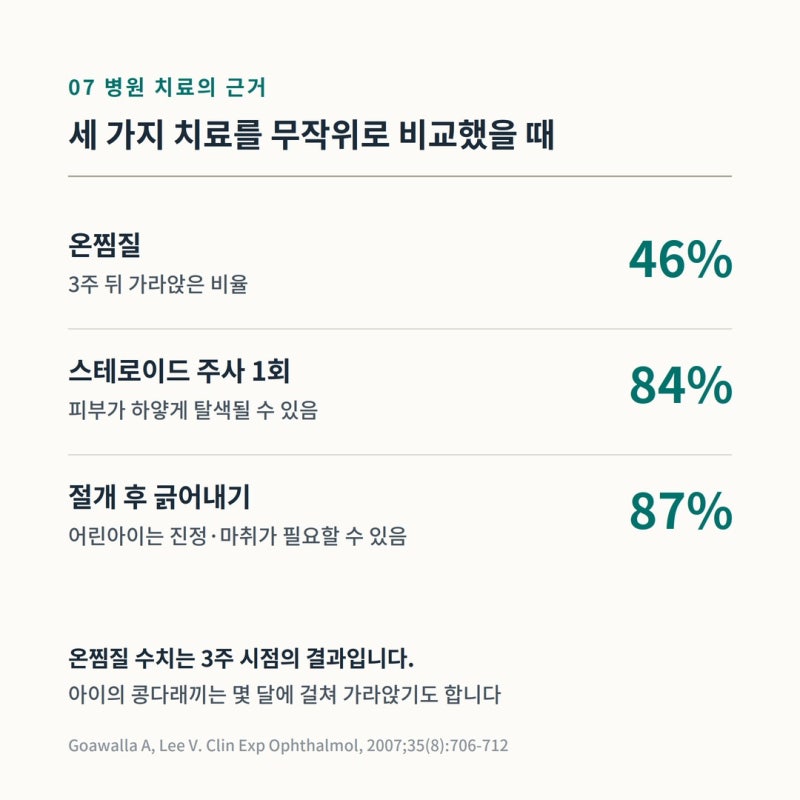
Here is what prospective randomized clinical research demonstrates:
Treatment Modality | Resolution Rate |
Warm Compresses | 46% (at 3 weeks) |
Single Steroid Injection + Massage | 84% |
Incision and Curettage | 87% |
Goawalla A, Lee V. Clin Exp Ophthalmol, 2007;35(8):706-712
Another randomized trial reported comparable success rates: 81% for steroid injection versus 79% for incision and curettage
(Ben Simon GJ et al., Am J Ophthalmol, 2011;151(4):714-718).
However, every intervention has its trade-offs:
The 46% success rate for warm compresses was measured at only 3 weeks. As demonstrated in Section 5, pediatric chalazia often resolve gradually over several months, meaning conservative care should not be deemed a failure at 3 weeks.
Steroid injections carry risks of localized hypopigmentation (depigmentation of the overlying skin) and subcutaneous fat atrophy, which are particularly noticeable in darker skin phototypes (AAO EyeNet, Chalazion Management: Evidence and Questions, 2015). This was also recognized as the most frequent complication in the Korean surgeon survey (Shin 2025).
Incision and curettage requires patient cooperation. In young children who cannot stay still, monitored anesthesia care (sedation) or general anesthesia may be required. In the Korean survey, preferred anesthesia for pediatric eyelid procedures was local anesthesia (50.0%), monitored anesthesia care (23.8%), and general anesthesia (16.2%) (Shin 2025).
Finally, recurrence is possible regardless of treatment. Clinical procedures empty the existing blockage, but they do not alter the underlying anatomical or physiological predisposition to meibomian obstruction. (See Section 8).
Consequently, for pediatric patients, "monitoring to verify that visual acuity remains unaffected while giving the body time to resolve" often takes precedence over rushed surgical extraction.
Treatment modalities are individualized based on size, location, age, chronicity, and refraction findings.
8. Children with Recurrent Styes — Checking for Blepharitis
If a child experiences frequent styes alternating between both eyes every few months rather than an isolated episode, one must examine the underlying eyelid margin environment rather than just the individual bump.
Frequent chalazia and styes are hallmark manifestations of Pediatric Blepharokeratoconjunctivitis (BKC)
(AAO Disease Review).
BKC is a condition where chronic inflammation of the eyelid margin progresses to involve the cornea and conjunctiva. If diagnosis is delayed, corneal scarring and permanent visual impairment can occur; it is frequently misdiagnosed as simple allergic conjunctivitis
(EyeWiki, Blepharokeratoconjunctivitis of Childhood).
Consider an ophthalmologic assessment if your child displays the following:
Recurrent styes or chalazia appearing across both eyelids
Frequent ocular redness, photophobia (light sensitivity), or habitual eye rubbing
Chronically erythematous eyelid margins with collarettes or scurf (dandruff-like flakes on lashes)
Facial flushing across the cheeks and bridge of the nose (pediatric ocular rosacea)
In adults, a persistent or recurrent chalazion in the exact same location is occasionally biopsied to rule out malignancies such as sebaceous gland carcinoma (Jordan 2023).
While this is exceptionally rare in children, if a parent has an identical recurring lesion in the same spot, clinical evaluation is advised.
9. Red Flag Symptoms Requiring Immediate Medical Attention
If your child presents with any of the following symptoms, seek same-day ophthalmic or emergency medical evaluation without waiting:
Eyelid swelling rapidly spreading across the entire lid or extending into the cheek and mid-face
Systemic fever, lethargy, or poor oral intake
Pain with extraocular movements, or noticeable protrusion (proptosis) of the eyeball
Subjective complaints of blurry vision, or inability to track/locate objects
Severe swelling preventing the eye from opening
Items 1–2 point toward preseptal cellulitis, while items 3–5 strongly warrant emergency assessment to rule out orbital cellulitis.
10. When to Seek an Ophthalmic Consultation
A tender, erythematous stye failing to improve after 1 to 2 weeks of warm compresses
A chalazion measuring ≥3 mm located in the center of the upper eyelid, or multiple lesions
A chalazion showing progressive enlargement
A persistent chalazion present for several months in a child under 6 years of age
Recurrent episodes of styes or chalazia
Concurrent ocular hyperemia (redness) and photophobia
Remember that "most cases resolve safely on their own."
Unless the above indications are present, you can comfortably continue warm compresses and observation at home.
11. Top 5 Frequently Asked Questions
Q1. Are styes contagious? Can my child attend school or daycare?
Styes are localized infections caused by ordinary commensal bacteria already present on the child's skin entering an obstructed gland, and chalazia are non-infectious blockages. They do not spread person-to-person like viral epidemic keratoconjunctivitis ("pink eye"). However, maintain separate towels and pillowcases, and encourage regular handwashing. Check your child care facility's specific attendance policies. If the eye is intensely red with copious discharge, have it evaluated, as it could be conjunctivitis rather than a stye.
Q2. A visible head of pus has formed. Will popping it speed up healing?
Never pop, squeeze, or lance it at home. Squeezing exerts inward pressure that can force bacteria into adjacent eyelid tissues and cause cellulitis (Gurnani 2024).
If it does not rupture spontaneously and continues to enlarge, it should be drained under sterile conditions at an eye clinic.
Q3. Will eye drops cure it?
Uncomplicated styes resolve primarily with warm compresses and hygiene; evidence indicating substantial benefits from antibiotic eye drops is limited (Gurnani 2024).
Chalazia are non-infectious inflammatory nodules and do not shrink with antibiotics alone. Eye drops or ointments are prescribed only when clinically indicated after examination.
Q4. My child has had a chalazion for 3 months. Is surgery mandatory?
Not necessarily. Pediatric chalazia can take months to resorb spontaneously, and Korean clinical literature shows an 85.7% resolution rate with non-surgical conservative care (Yang 2024).
However, if it is a large nodule located in the center of the upper eyelid, have an eye exam and cycloplegic refraction first to ensure it is not inducing astigmatism (Ouyang 2022).
Management strategy (continued observation vs. clinical treatment) is decided based on those exam findings.
Q5. Are steroid injections safe for children?
A small comparative study demonstrated that intralesional steroid injections achieved similar resolution times (averaging 2–3 weeks) in both pediatric and adult cohorts
(Lee JWY et al., Sci World J, 2014; 17 children, 24 adults).
However, potential risks such as localized skin hypopigmentation (whitening of the skin) and the necessity for the child to remain still during needle delivery must be weighed carefully.
We explain the risks and benefits thoroughly so parents can make an informed choice.
More Video Resources
Comprehensive visual explanations regarding pediatric ocular health and eyelid disorders are available on our YouTube channel, JIN EYE Clinic.
About St. Mary's Jin Eye Center
St. Mary's Jin Eye Center
337 Gangnam-daero, Seocho-gu, Seoul (Seocho-dong 1329-10)
5-minute walk from Gangnam Station Exit 5 · Free on-site parking
📞 02-577-7782
Clinic Hours
Weekdays: 09:00–18:00 (Lunch break: 13:00–14:00)
Saturday: 09:00–15:00
Closed Sundays & Public Holidays
Medical Staff: Dr. Jin-hyung Park, Chief Medical Director (Ph.D. in Ophthalmology, The Catholic University of Korea; Clinical Adjunct Professor, Department of Ophthalmology, The Catholic University of Korea; Member of the Korean Society of Cataract and Refractive Surgery), Dr. Jae-hyun Park, Clinic Director — Two Board-Certified Ophthalmologists from Seoul St. Mary's Hospital
Pediatric Ophthalmology Services: Stye and chalazion evaluation · Cycloplegic refraction (approx. 1-hour wait) · Pediatric myopia management (MiYOSMART, Myotect 0.05%, MiSight, Ortho-K Dream Lenses) · Strabismus & Amblyopia
Medical Disclaimer: This article is intended for general medical educational purposes only and is not a substitute for professional diagnosis or individualized treatment. Clinical management of styes and chalazia depends on the child's age, lesion size and position, chronicity, visual refraction status, and coexisting ocular surface conditions. Treatments discussed do not guarantee identical outcomes for every patient and carry inherent risks of side effects or recurrence. If your child shows symptoms, consult a qualified ophthalmologist.
References
Gurnani B, Guier CP, Patel BC. Hordeolum (Stye). StatPearls. Treasure Island (FL): StatPearls Publishing; updated 2024 Dec 11.
Jordan GA, Beier K. Chalazion. StatPearls. Treasure Island (FL): StatPearls Publishing; updated 2023 Jul 31.
Lindsley K, Nichols JJ, Dickersin K. Non-surgical interventions for acute internal hordeolum. Cochrane Database Syst Rev. 2017;1:CD007742.
Yang SA, Chambers CB, Kang MS, Ahn JH. Conservative treatment of chalazion in pediatric patients. J Craniofac Surg. 2024. doi:10.1097/SCS.0000000000010644.
Ouyang L, Chen X, Pi L, Ke N. Multivariate analysis of the effect of chalazia on astigmatism in children. BMC Ophthalmol. 2022;22:310.
Shin, Yoon, Choung, Lew. Management practice for hordeolum and chalazion: a survey of the Korean Society of Ophthalmic Plastic and Reconstructive Surgery (KSOPRS) members. Korean J Ophthalmol. 2025;39:222-240.
Goawalla A, Lee V. A prospective randomized treatment study comparing three treatment options for chalazia: triamcinolone acetonide injections, incision and curettage and treatment with hot compresses. Clin Exp Ophthalmol. 2007;35(8):706-712.
Ben Simon GJ, et al. Intralesional triamcinolone acetonide injection versus incision and curettage for primary chalazia: a prospective, randomized study. Am J Ophthalmol. 2011;151(4):714-718.
Lee JWY, Yau GSK, Wong MYY, Yuen CYF. A comparison of intralesional triamcinolone acetonide injection for primary chalazion in children and adults. Sci World J. 2014;2014:413729.
Elsayed, Al Kahtani. Chalazion management: evidence and questions. EyeNet Magazine (Ophthalmic Pearls), American Academy of Ophthalmology, 2015 Sep.
American Academy of Ophthalmology. Disease Review: Pediatric Eyelid Margin Disease — Blepharokeratoconjunctivitis and Chalazia.
EyeWiki (American Academy of Ophthalmology). Blepharokeratoconjunctivitis (BKC) of Childhood.