2026-09-18
Child Scored 0.7 on School Vision Test? What to Check Before Getting Glasses for Elementary Myopia
Received a 0.7 school vision score? Discover why checking axial length and cycloplegic refraction before getting glasses is essential for elementary school myopia control.
As the second semester begins, many parents are receiving their child's school vision screening results.
If you are looking at numbers like 0.7 or 0.6 (approx. 20/30) and wondering, "Should I get my child glasses?", there is something critical you must check before heading to an optical shop.
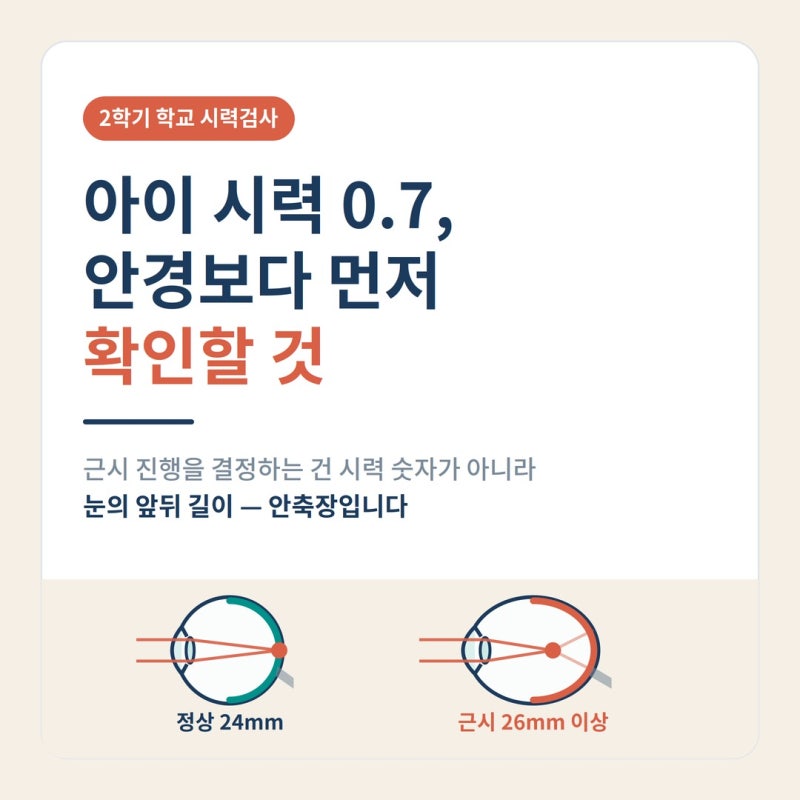
To get right to the point: children whose visual acuity is 0.7 or below should visit an ophthalmology clinic rather than an optical shop to undergo a 'cycloplegic refraction test' and 'axial length measurement' first.
This is because visual acuity alone cannot tell you whether it is true myopia, nor how rapidly the myopia is currently progressing.
Hello, this is St. Mary Jin Eye Clinic.
Today, we will break down on an evidence-based basis how to interpret school vision screening results and what steps you can take right now to slow down your child's myopia progression.
[Table of Contents]
What does a vision score of 0.7 mean?
Why should you look at 'axial length' rather than vision score alone?
What happens if myopia is left untreated?
4 evidence-based ways to slow myopia progression
Which method is right for our child?
Daily lifestyle habits you can manage at home
What exams are performed at an ophthalmology clinic?
Frequently Asked Questions
1. What does a vision score of 0.7 mean?
A score of 0.7 on a school vision screening represents uncorrected visual acuity—meaning vision tested without glasses.
This single number alone is not sufficient to make a medical diagnosis.
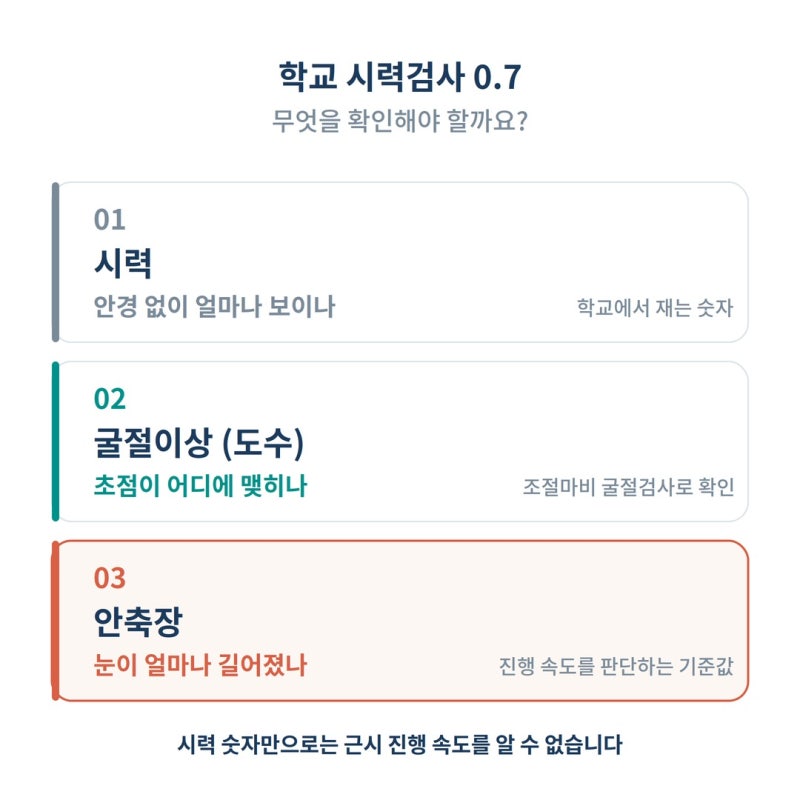
Even with the exact same 0.7 vision score, the underlying causes can be entirely different.
▶ True Myopia — The eyeball elongates front-to-back, causing light to focus in front of the retina.
▶ Pseudomyopia (Accommodative Spasm) — Prolonged close-up viewing temporarily freezes the ciliary muscles responsible for focusing. This is not structural myopia.
▶ Astigmatism / Hyperopia — Vision is reduced without axial myopia.
▶ Amblyopia / Strabismus — Vision cannot be fully corrected with glasses alone. Treatment must begin before age 8.
Children, in particular, possess far stronger accommodative focus than adults. When tested without cycloplegic eye drops, their myopia is frequently over-measured beyond their actual refractive error.
Prescribing glasses in this over-accommodated state results in an unnecessarily strong prescription.
Therefore, the gold standard for pediatric myopia evaluation is a cycloplegic refraction test.
This cannot be performed at an optical shop; it can only be done at an ophthalmology clinic.
2. Why should you look at 'axial length' rather than vision score alone?
This is the most critical part of this article.
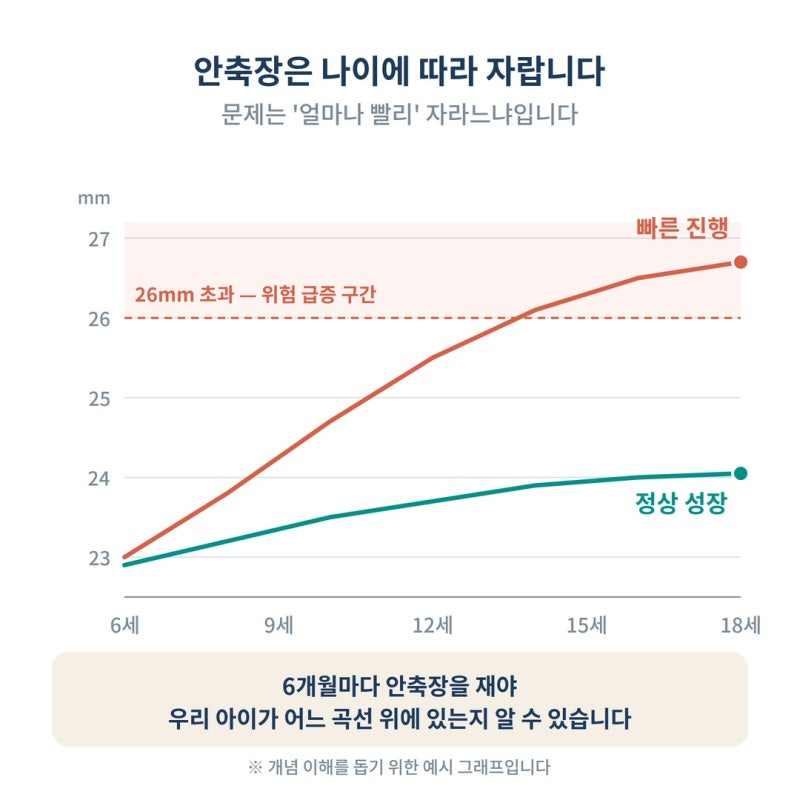
Axial length is the front-to-back measurement of the eyeball.
A normal adult eye measures approximately 24 mm, and myopia occurs when this length grows beyond normal parameters.
For every 1 diopter (D) increase in myopia, the axial length typically lengthens by approximately 0.3 to 0.4 mm.
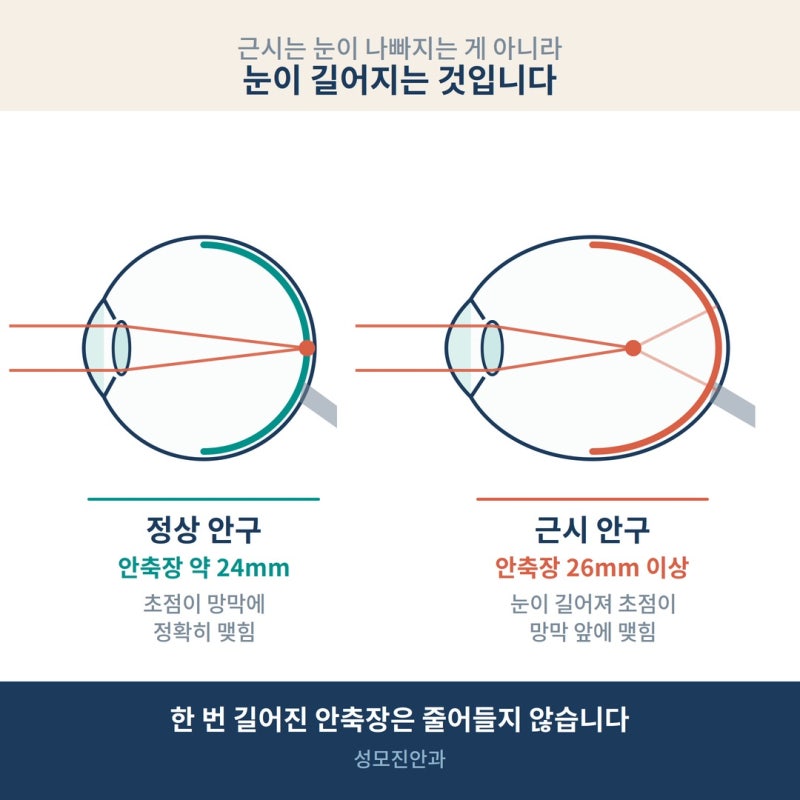
Here is the crucial reality: once the axial length elongates, it never shrinks back.
You can easily update an eyeglass prescription, but an elongated axial length cannot be reversed.
An elongated eyeball means that the delicate retina lining the interior of the eye is stretched increasingly thin, leading directly to higher risks of vision-threatening retinal diseases in adulthood.
Because of this, modern pediatric myopia management has shifted its primary goal from "simply improving visual acuity" to "suppressing the rate of axial length elongation." This is why tracking your child's axial growth curve every 6 months is so essential.
3. What happens if myopia is left untreated?
Let us look at current statistics first. According to data released by the Korean Ophthalmological Society in November 2025:
▶ 30.8% of 1st-grade elementary students and 74.8% of 1st-year high school students have visual impairment (uncorrected visual acuity of 0.7 or below).
▶ The rate of adolescent vision impairment surged from 9% roughly 40 years ago to 57% in 2024.
▶ Among 19-year-old Korean males, high myopia reaches 20.3%.
In other words, a child developing myopia is no longer unusual.
The real issue is how severe it ultimately becomes.
As myopia deepens, the risk of adult ocular diseases escalates exponentially.
[Ocular Disease Risk by Myopia Degree — Compared to Normal Vision]
Myopia Degree | Retinal Detachment | Myopic Macular Degeneration | Glaucoma | Cataract |
-1 to -3D | 3.1x | 2.2x | 2.3x | 2.1x |
-3 to -5D | 9.0x | 9.7x | 3.3x | 3.1x |
-5 to -7D | 21.5x | 40.6x | 3.3x | 5.5x |
-7D or more | 44.2x | 126.8x | — | — |
(Flitcroft DI, Progress in Retinal and Eye Research, 2012)
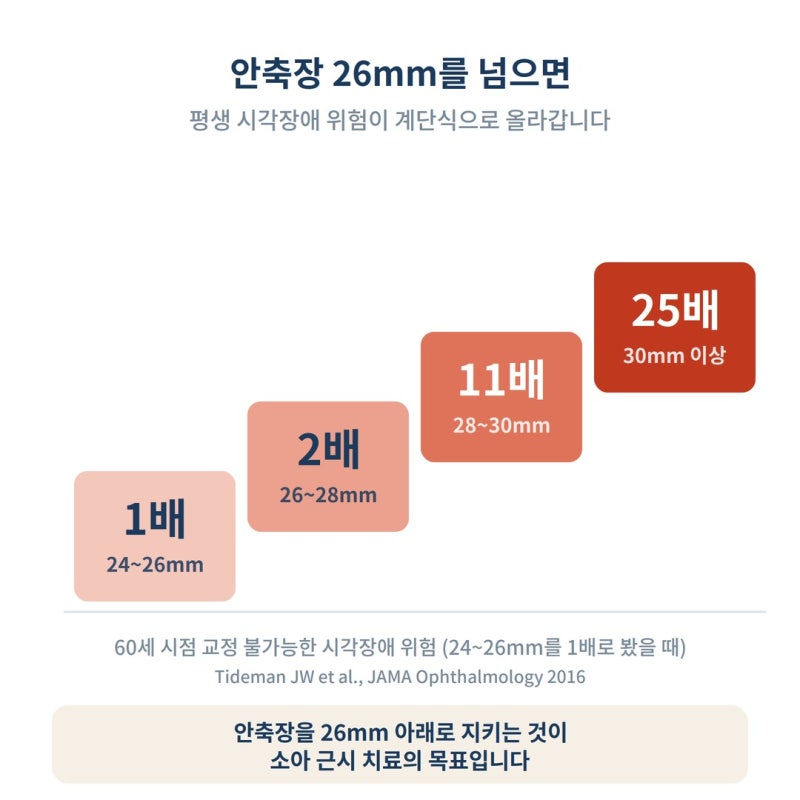
The pattern is even clearer when measured by axial length. A European cohort study analyzing over 10,000 individuals showed that once axial length exceeds 26 mm, the risk of uncorrectable visual impairment surges steeply.
[Visual Impairment Risk by Axial Length]
Axial Length | Visual Impairment Risk at Age 60 | Visual Impairment Prevalence at Age 75 |
24–26 mm | Baseline (1x) | 4% |
26–28 mm | 2x | 25% |
28–30 mm | 11x | 27% |
30 mm or more | 25x | 90% |
(Tideman JW et al., JAMA Ophthalmology, 2016)
In summary, managing pediatric myopia is not simply about fitting glasses correctly; it is about preemptively reducing your child's risk of blindness when they reach their 60s and 70s.
And the window of opportunity for this intervention exists only during their growth phase—right now.
4. 4 evidence-based ways to slow myopia progression
Currently, four methods have robust, internationally recognized scientific evidence.
Our clinic provides all four options, tailored to the child's age, degree of myopia, axial growth velocity, and daily lifestyle.
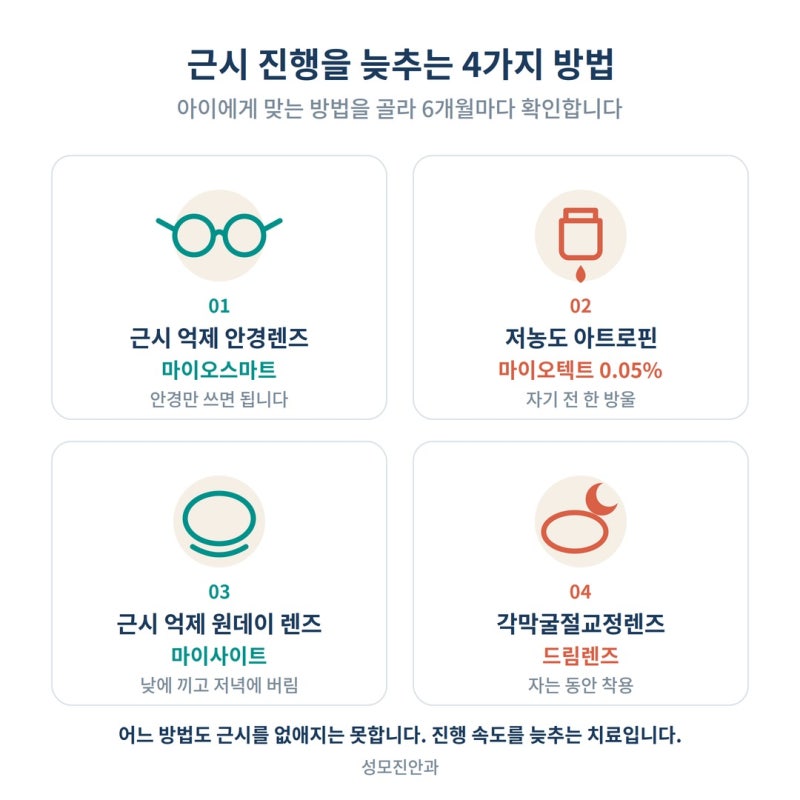
① Myopia Control Eyeglass Lenses — MiYOSMART (DIMS Technology)
While appearing identical to standard eyeglasses from the outside, these specialized lenses incorporate densely patterned micro-convex segments across the mid-periphery to shift peripheral retinal focus forward (myopic defocus).
Here are the 2-year randomized clinical trial results conducted by Hong Kong Polytechnic University on 183 children aged 8–13:
| MiYOSMART | Standard Single-Vision Lenses |
2-Year Myopia Progression | -0.41D | -0.85D |
2-Year Axial Length Elongation | 0.21 mm | 0.55 mm |
(Lam CSY et al., British Journal of Ophthalmology, 2020)
Axial elongation was suppressed by approximately 60% compared to the control group, and 21% of children experienced zero progression over the 2-year period.
6-year follow-up data demonstrated sustained efficacy without evidence of a severe rebound effect after cessation.
□ Advantages — All the child needs to do is wear their glasses.
Zero risk of corneal infection, highest acceptance among children.
Can be initiated at a very young age.
□ Limitations — Must be worn consistently during all waking hours.
In the clinical trial, actual wearing time averaged 15 hours per day.
If a child takes them off as soon as they get home, significant efficacy cannot be expected.
Accurate frame fitting is vital to align the optical center with the pupil.
② Low-Concentration Atropine Eye Drops — Myotect 0.05%
Administered as one drop before bedtime. The landmark LAMP study by the Chinese University of Hong Kong directly compared concentrations of 0.01%, 0.025%, and 0.05%, concluding that 0.05% demonstrated the highest efficacy in suppressing axial elongation.
[LAMP Study 5-Year Cumulative Results — by Concentration]
Concentration | Myopia Progression (SER) | Axial Length Elongation |
0.05% | -1.34D | 0.79 mm |
0.025% | -1.97D | 1.11 mm |
0.01% | -2.34D | 1.24 mm |
(Yam JC et al., Ophthalmology — LAMP Study Phase 4, 2024)
Previously in Korea, domestic approval was centered primarily around the 0.125% concentration, making 0.05% difficult to access despite its superior clinical profile.
However, in January 2026, Taejoon Pharm's Myotect Eye Drops 0.05% received first-in-class domestic regulatory approval, and our clinic now predominantly prescribes this 0.05% formulation.
□ Advantages — Low management burden, requiring only a single drop at night.
Can be combined with glasses or contact lenses, and can be initiated even in very young children experiencing early-onset myopia.
□ Limitations — The most common adverse effect is photophobia (glare), reported more frequently in the 0.05% group.
Temporary near-vision blur can occur.
Progression may accelerate if discontinued prematurely.
In the LAMP study, 87.9% of children who ceased treatment at Year 3 eventually required re-treatment.
③ Myopia Control Soft Contact Lenses — MiSight (MiSight 1 day)
Daily disposable daytime soft contact lenses.
Featuring dual-focus rings within the optic zone, they maintain clear central vision while simultaneously presenting myopic defocus signals to curb eye growth.
Because a fresh lens is used and discarded daily, hygiene compliance is straightforward and infection risks are minimal.
Results from a 3-year randomized clinical trial on children aged 8–12:
▶ 59% reduction in myopia progression (0.73D less progression vs. control)
▶ 52% reduction in axial elongation (0.32 mm less elongation vs. control)
(Chamberlain P et al., Optometry and Vision Science, 2019)
In the 6-year extension trial, children who wore the lenses for the entire 6 years had an axial elongation of only 0.49 mm, compared to 0.81 mm in those who initiated therapy 3 years later. This data reinforces the significant clinical advantage of early intervention.
(Chamberlain P et al., Optometry and Vision Science, 2022)
□ Advantages — Eliminates the need for daytime glasses, making it ideal for active, sports-playing children.
Daily disposable format requires no cleaning solutions; lower adaptation barrier than Ortho-K lenses.
Can be discontinued at any time if unsuitable.
□ Limitations — The child must be able to insert and remove lenses independently.
Proven clinical efficacy requires wearing them at least 6 days a week, 13 hours per day.
May not be suitable for patients with high astigmatism.
④ Corneal Refractive Therapy — Dream Lenses (Orthokeratology / Ortho-K)
Rigid lenses worn exclusively overnight to temporarily reshape corneal surface curvature, providing clear uncorrected vision throughout the day without daytime glasses or lenses.
□ Efficacy — Multiple meta-analyses show an average axial elongation reduction of approximately 0.25 mm over 2 years.
□ Advantages — Complete daytime visual freedom.
Ideal for children participating in swimming or intense contact sports, or those unable to manage daytime lens wear.
□ Limitations — Because lenses are worn overnight, the risk of infectious keratitis is not zero.
A 2024 multicenter study tracking 1,438 patients across 4 Japanese hospitals reported a microbial keratitis incidence of 5.4 cases per 10,000 person-years—comparable to or slightly lower than daily soft lenses.
However, this safety profile assumes meticulous cleaning regimens and regular follow-up visits.
Certain corneal curvatures and high astigmatism may be contraindicated, which is assessed via corneal topography.
※ None of these four treatments reverse or cure existing myopia.
All are modalities designed to "slow down progression velocity," and individual responses vary.
Across clinical studies, approximately 10% of children show minimal response.
Consequently, our protocol mandates measuring axial length every 6 months to evaluate response and, if necessary, adjust or combine treatments.
5. Which method is right for our child?
This is the question parents ask most frequently.
Here is a summary of the clinical criteria we consider during consultations:
Child's Clinical Situation | Primary Recommendation |
Age 6–8, contact lenses not feasible yet | MiYOSMART glasses or Myotect eye drops |
Rapid myopia progression (≥ 1D/year) | Consider combination therapy (Optical + Atropine) |
Very active in sports; glasses cause discomfort | MiSight or Dream Lenses (Ortho-K) |
Child unable to insert contact lenses independently | MiYOSMART glasses + Myotect eye drops |
Dislikes both daytime glasses and contacts; desires total daytime freedom | Dream Lenses (Ortho-K) |
High astigmatism present | Determined after corneal topography (Dream lenses may be restricted) |
Not myopic yet, but both parents have myopia | Outdoor activity + 6-month axial length tracking |
The key principle is choosing a treatment method the child can actually adhere to consistently.
No matter how impressive the research data is, if the child refuses to wear or apply the treatment, efficacy drops to zero.
This is why during initial consultations, we thoroughly review the child's daily routine and habits.
6. Daily lifestyle habits you can manage at home
Before introducing medications or lenses, there is one proven lifestyle intervention backed by indisputable scientific evidence: outdoor activity.
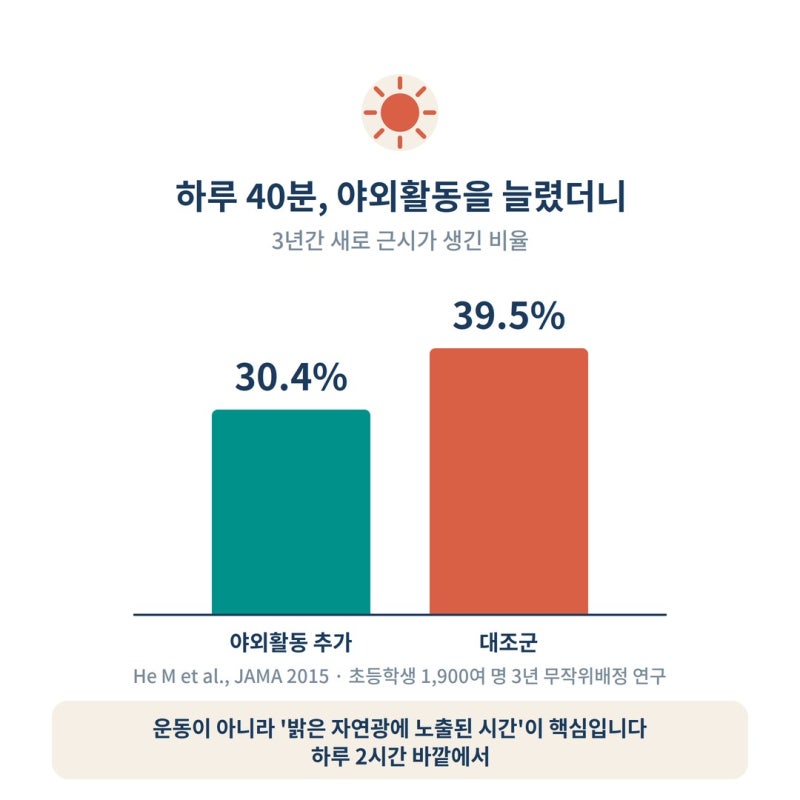
A landmark 3-year randomized cluster trial in Guangzhou, China, involving over 1,900 elementary school children evaluated this effect.
When schools added an extra 40 minutes of outdoor activity each day:
▶ New-onset myopia over 3 years: 30.4% in the outdoor intervention group vs. 39.5% in the control group.
(He M et al., JAMA, 2015)
While outdoor time alone cannot substantially arrest progression in eyes where myopia is already underway, it demonstrates a decisive preventative effect in delaying myopia onset in non-myopic children.
The crucial mechanism is not physical exercise itself, but exposure to bright natural daylight. Aiming for approximately 2 hours of outdoor daylight exposure per day is strongly recommended.
Additional daily habits to maintain:
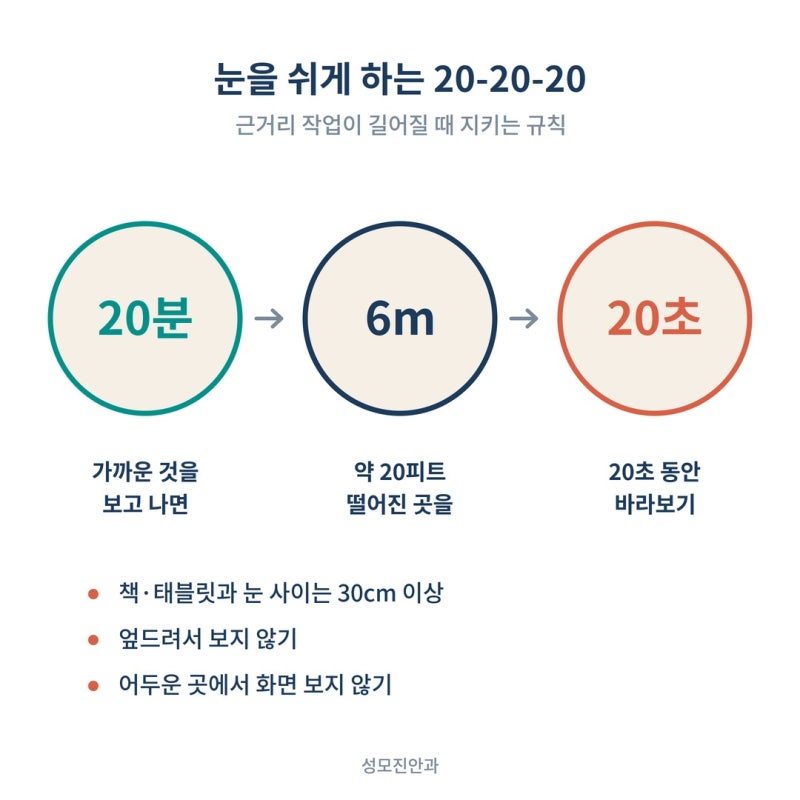
The 20-20-20 Rule — After 20 minutes of near work, look at an object 20 feet (approx. 6 meters) away for 20 seconds.
Maintain at least 30 cm distance between eyes and reading material/tablets.
Avoid reading while lying down — this creates asymmetrical viewing distances, often worsening anisometropia (refractive imbalance between eyes).
Never view digital screens in dark rooms.
7. What exams are performed at an ophthalmology clinic?
A comprehensive initial consultation typically proceeds through the following examinations:
Examination | Clinical Purpose |
Uncorrected & Corrected Visual Acuity | Assess baseline functional vision |
Autorefraction | Approximate refractive baseline |
Cycloplegic Refraction | Accurate true refraction, ruling out pseudomyopia |
Axial Length Biometry | Anterior-posterior eye length — baseline for progression velocity |
Corneal Topography | Corneal curvature/astigmatism, lens candidacy |
Strabismus & Stereopsis Testing | Assess binocular alignment and 3D depth perception |
Fundus Examination | Retinal and optic nerve health |
The cycloplegic refraction exam involves instilling eye drops and waiting approximately 1 hour for the ciliary muscles to relax fully.
For several hours following the test, the child will experience pupil dilation, glare, and difficulty focusing on near text.
We recommend scheduling the exam on a day without school exams or intensive academy classes. Bringing sunglasses or a brimmed cap will keep your child comfortable on the way home.
Establishing an accurate axial length baseline on your first visit allows us to remeasure every 6 months to objectively determine whether your child's eye is elongating faster than peer averages.
Without this baseline measurement, it is difficult to determine when to initiate treatment or objectively verify whether a therapy is working.
8. Frequently Asked Questions
Q. Is it true that wearing glasses makes a child's eyes worse?
No, this is a common myth.
On the contrary, wearing an incorrect prescription or avoiding needed corrective glasses can accelerate progression due to abnormal retinal blur.
Myopia progression is driven by the biological elongation of the eyeball during growth, not by wearing corrective glasses.
Q. When does myopia progression usually stop?
While individual variations exist, progression generally stabilizes between ages 18 and 20 when physical growth completes.
Because the fastest progression occurs during elementary school years, clinical intervention yields the highest therapeutic value during this early window.
Q. Are MiYOSMART glasses alone sufficient, or should we combine them with eye drops?
It depends on progression velocity.
If axial length elongation remains stable within 0.2 mm per year, glasses alone are often sufficient. If progression is faster, we evaluate combination therapy with low-concentration atropine.
While synergistic benefits have been documented with combination protocols, each child's clinical profile is unique and requires specialist evaluation.
Q. What is the difference between MiSight and Dream Lenses (Ortho-K)?
MiSight lenses are daily disposable soft lenses worn during the day and thrown away at night. Dream Lenses are rigid gas-permeable lenses worn overnight while sleeping and removed in the morning.
MiSight requires no cleaning solutions and is simple to pause or discontinue, but the child must wear contacts during school hours. Dream Lenses allow total daytime freedom from glasses or contacts, but require daily lens hygiene and strict regular check-ups.
Both modalities demonstrate comparable efficacy in suppressing myopia progression.
Q. If we stop low-concentration atropine, will the myopia rebound?
Myopia itself does not reverse, but progression velocity can accelerate back to pre-treatment rates after cessation.
In the LAMP study, 87.9% of children who stopped treatment at Year 3 required resumption of therapy.
It is generally best to plan on maintaining treatment until growth stabilization occurs.
Q. At what age can a child begin wearing contact lenses?
There is no strict lower age cutoff; the true criterion is whether the child can safely handle lens insertion, removal, and basic hygiene independently.
MiSight clinical trials began at age 8, while Dream Lenses are typically initiated in middle elementary grades and above.
For younger children, dedicated daily parental management is essential.
Q. Should we still get tested if our child's vision is 1.0 (20/20)?
Axial elongation often begins prior to any noticeable drop in central visual acuity.
If either parent has myopia, we recommend obtaining a baseline axial length measurement around ages 6 to 7, even if standard visual acuity tests are normal.
https://youtu.be/LZeSlnO50hU?si=uZtyG-Aki0EpdKl0
For more in-depth visual explanations regarding pediatric myopia, visit the pediatric myopia playlist on the St. Mary Jin Eye Clinic YouTube channel 'Jjin Eye Clinic'.
https://www.youtube.com/playlist?list=PL14PKwDUN1v0QBadayd9BQH4rXDsj40BQ
Conclusion
A school vision screening report is not a final medical diagnosis—it is a signal advising you to visit an eye clinic.
Far more important than the number 0.7 itself is the rate at which the axial length behind that number is growing.
We cannot reverse established myopia, but through early intervention, we can fundamentally alter how severe it becomes.
And that critical window of opportunity exists only while your child is growing.
Please feel free to contact us with any questions.
St. Mary Jin Eye Clinic
Floors 1, 4, 5, 337 Gangnam-daero, Seocho-gu, Seoul (1329-10 Seocho-dong)
5-minute walk from Gangnam Station Exit 5 · Free on-site parking available
Clinic Hours
Weekdays: 09:00 – 18:00 (Lunch break 13:00 – 14:00)
Saturdays: 09:00 – 15:00 (No lunch break)
Closed Sundays & Public Holidays
Phone: 02-577-7782
※ This article is provided for general informational purposes only and does not substitute for individualized medical diagnosis or treatment. Therapeutic efficacy and potential side effects of the mentioned modalities vary by individual, and all treatment decisions must be made in consultation with an ophthalmology specialist.
[References]
Korean Ophthalmological Society 55th Eye Day Factsheet (2025)
Flitcroft DI. Prog Retin Eye Res. 2012
Tideman JW et al. JAMA Ophthalmol. 2016
Lam CSY et al. Br J Ophthalmol. 2020 (DIMS)
Yam JC et al. LAMP Study Phase 4. Ophthalmology. 2024
Chamberlain P et al. Optom Vis Sci. 2019 / 2022 (MiSight)
Hiraoka T et al. Jpn J Ophthalmol. 2024
He M et al. JAMA. 2015